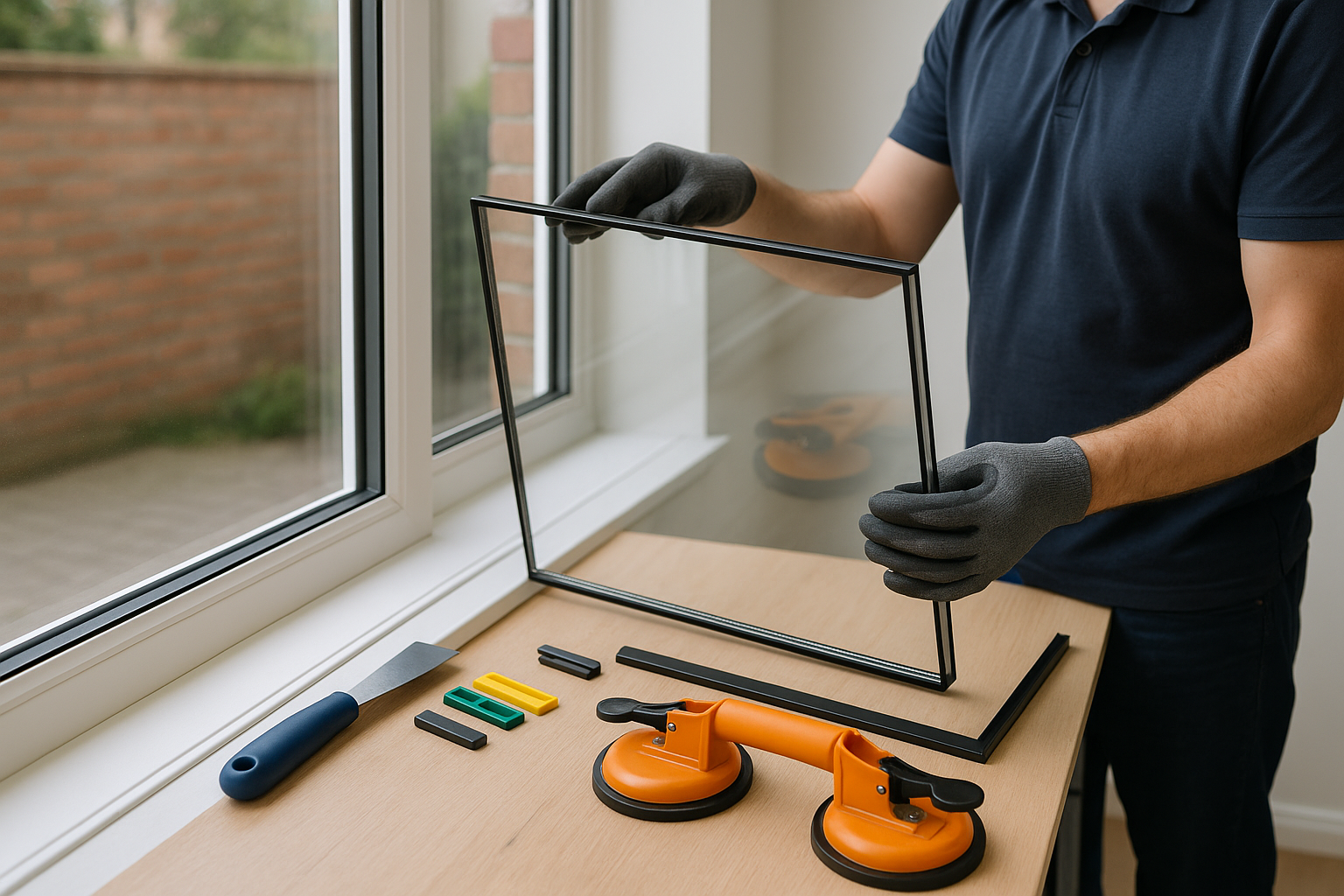
If you need toughened and safety glass in Caterham, the first question is usually not just “what glass do I need?” but “what is the safest way to replace it?”. That matters whether the issue is a broken door pane, a low-level window in a family home, a shopfront panel, a screen in a modern office, or a non-standard glazed opening in a period property.
Brightura glass specialists work from 32 Manor Ave, Caterham CR3 6AN and support homeowners, local businesses, property managers and builders across Caterham and nearby areas including Whyteleafe, Coulsdon, Warlingham, Kenley and Purley. We also help customers near Caterham Station, Church Walk Shopping Centre, Queens Park Caterham, The Arc Caterham and along routes serving the North Downs Way.
This page is designed to help you understand the glass types, how replacement units are built, and what customers should not try to do themselves. In safety glazing work, the wrong handling can make the damage worse, leave sharp edges exposed, or create a risk in the opening where the glass was fitted.
If glass is broken, cracked, loose, misted, or no longer suitable for the location, keep people and pets away from the area and arrange a make-safe visit. For advice or to request a visit, call 020 3633 8176 or email info@glaziers-caterham.co.uk.
Recent local work has included emergency glazing advice in Whyteleafe, a misted double glazing check in Coulsdon, and a shopfront board-up visit in Warlingham. Those jobs reflect the kind of practical guidance customers often need first: secure the area, identify the glass type, measure correctly, and then replace like-for-like where appropriate or upgrade where safety rules and the opening require it.
In many cases, customers searching for toughened glass supply and fitting Caterham are dealing with a broken pane in a door, a side panel, or a low-level window. Others need laminated safety glass Caterham for added hold-together performance, or made to measure safety glass Caterham where the opening is not a standard size. The right answer depends on the location, the frame type, the use of the room, and the risk if the pane fails.
We support a range of related glazing work too, including glazier services, emergency glazing, glass repair, window repair, double glazing repairs, boarding up, door glass replacement and window glass replacement. For many customers, the best starting point is a clear explanation of the glass itself.
Typical symptoms that a safety glass replacement may be needed include visible cracks, chips at the edge, shattered toughened panes, failed sealed units, loose glazing beads, glass that sits in a vulnerable low position, and panels that no longer match the current use of the property. In commercial settings, damaged partitions or shopfront glass can also affect access, security and presentation.
Our approach is straightforward: assess the opening, identify the glass type where possible, measure carefully, and explain the replacement options in plain English. If the job needs temporary boarding first, that can be discussed as part of making the area safe before the final replacement is fitted.
Toughened Glass Supply and Fitting in Caterham
Toughened glass is designed to be stronger than standard annealed glass and, if it breaks, it fractures into small pieces rather than large dangerous shards. That makes it a common choice for doors, side panels, low-level glazing, shower screens, some furniture applications and other locations where impact risk is higher.
For toughened glass supply and fitting Caterham, the practical questions are usually about the opening, the thickness, the edge detail, and whether the pane is part of a double glazed unit or a single glazed installation. A toughened pane cannot simply be cut down on site after it has been processed, so accurate measuring matters before manufacture. That is one reason DIY replacement often goes wrong.
In homes around Caterham, toughened panes are often used in uPVC or timber doors, patio doors, side panels and some ground-floor windows. In commercial premises near Church Walk Shopping Centre or along busy footfall routes, it may also be used in entrance doors and internal screens where impact resistance is important.
What customers should not DIY: do not attempt to remove cracked toughened glass from a door or panel without proper protection, tools and safe disposal arrangements. Do not try to trim, drill or recut toughened glass. Do not reuse damaged beads, gaskets or packers if they no longer hold the pane securely. If the glass has already failed, treat the area as hazardous until it has been made safe.
When we inspect a toughened pane, we look at the frame type, the glazing method, the surrounding seals and any signs of movement or impact. If the pane is part of a sealed unit, the replacement may need to be made to the same dimensions and specification so the finished result sits correctly in the opening.
For customers wanting a cleaner finish after breakage, we can explain whether a direct replacement is suitable or whether the whole unit should be renewed. That is especially important in doors and side panels where appearance, safety and fitting tolerances all matter.
Laminated Safety Glass in Caterham
Laminated safety glass is built with interlayers that help the pane hold together if it breaks. Instead of dropping away immediately, the broken glass tends to remain bonded to the interlayer, which can be useful where falling debris would create a risk or where a pane needs a higher level of post-breakage retention.
Customers often ask about laminated safety glass Caterham for doors, low-level windows, roof-related applications, internal partitions, shopfronts and certain security-conscious installations. It is also considered in places where people could come into contact with the glass more easily, or where the consequences of breakage would be more serious.
In practical terms, laminated glass is not the same as toughened glass, and the right choice depends on the job. Toughened glass is often selected for impact resistance and heat treatment performance, while laminated glass is chosen for hold-together behaviour and, in some cases, acoustic or security benefits depending on the build-up.
For property managers and local businesses, the decision may also depend on how the glass is used day to day. A busy entrance, a communal area, or a screen in a workplace can have different requirements from a domestic upstairs window. In period homes around Caterham and nearby Warlingham or Purley, the existing frame and glazing bars may also influence the best replacement option.
What customers should not DIY: laminated glass can be heavy, awkward and difficult to handle safely without the right lifting support. Do not force a pane into a frame that is tight or uneven. Do not assume a laminated replacement will fit simply because the visible opening looks simple. Accurate measuring includes rebate dimensions, thickness, and any allowances for packers or seals.
If a laminated pane has been damaged, the opening should be checked before re-glazing. Cracks can spread, edges can become unstable, and in some cases the frame itself may have shifted. A proper survey helps establish whether the issue is just the glass or whether the surrounding glazing system also needs attention.
Low-Level and Door Side Panel Glass in Caterham
Low-level glazing and side panels are among the most important safety-related applications in domestic and commercial properties. This is the kind of glass that sits close to the floor, beside a door, or in a position where someone could walk into it, lean on it, or strike it accidentally.
For low-level and door side panel glass Caterham, the main concern is not only breakage, but also what happens if the pane is impacted. In many cases, the correct specification will depend on the height from finished floor level, the room use, and the overall design of the door or window system.
This type of glazing is common in uPVC doors, timber front doors, patio doors, French doors, and side lights in hallways or entrances. It is also found in some commercial entrances and internal glazed screens. If a pane in this position is cracked, misted, loose or already broken, it should be treated as a priority because the risk of injury is higher than with an upper-floor pane that is less likely to be touched.
What customers should not DIY: do not tape over broken side panel glass and assume that is a safe fix. Tape does not make the pane structurally sound. Do not leave loose shards in the frame. Do not replace a side panel with ordinary glass if the location requires a safety specification. If in doubt, ask for a visit and an assessment before the opening is used again.
We regularly help customers who are unsure whether the original glass was toughened, laminated or a standard sealed unit. The visible appearance can be misleading, especially in older doors or replacement windows. A proper measurement and inspection help identify the most suitable replacement and reduce the chance of ordering the wrong type.
For landlords, agents and property managers, low-level glass is often a maintenance issue that needs a clear explanation for occupiers. We can help with safe temporary measures, replacement advice and follow-up fitting where access arrangements need to be considered.
Balustrade and Screen Glass in Caterham
Balustrade and screen glass is used where transparency, safety and load considerations all matter. It may be fitted in stair voids, landings, terraces, internal office divisions, reception areas or other spaces where a large glazed panel forms part of the layout.
Balustrade and screen glass Caterham enquiries often involve a mix of technical and practical questions: what thickness is needed, whether the glass should be toughened or laminated, how the panel is retained, and whether the existing support system is still suitable. In many cases, the glass specification is tied to the structure around it, so the frame, clamps, channels or fixings matter as much as the pane itself.
In homes near the North Downs Way or in modern developments around Caterham, a glass screen may be used to open up light while keeping the space secure. In business premises, screens can separate work areas without making the building feel closed in. If the glass is damaged, chipped or scratched in a way that affects safety or appearance, replacement should be planned carefully rather than rushed.
What customers should not DIY: do not remove balustrade or screen glass without understanding how it is supported. These systems can rely on hidden fixings, edge support or specific gasket arrangements. A panel that seems simple may actually be carrying significant load or stability requirements. If the wrong glass is installed, it can compromise the whole assembly.
We can assess the existing panel, measure the opening, and explain the likely replacement route. For some jobs, the safest outcome is to replace like-for-like. For others, the opportunity is to improve the specification where the current panel is no longer fit for purpose.
Made to Measure Safety Glass in Caterham
Not every opening uses a standard size or standard specification. Older properties, altered door sets, bespoke shopfronts and previous repair jobs can all create openings that need made to measure safety glass Caterham solutions.
Made-to-measure work starts with correct measuring. That means more than just width and height. The frame type, rebate depth, thickness, edge finish, corner detail and any obstructions all affect the finished pane. In double glazed units, the construction also includes the spacer, the sealed cavity and the overall thickness of the unit.
Customers often assume that if a pane looks “about the same size” it will fit. In practice, even a small error can stop the glass seating properly, affect the seals, or leave the pane under stress. That is why a careful survey is so important before ordering.
What customers should not DIY: do not measure only the visible glass area and ignore the rebate. Do not reuse broken patterns or templates unless they are accurate and undamaged. Do not fit a pane based on guesswork if the opening is unusual, especially in timber frames or older properties where the opening may not be perfectly square.
Made-to-measure safety glass is often the right answer for:
- non-standard door panels
- older timber windows
- shopfront glass
- specialist side lights
- screens and partitions
- replacement panes where the original specification is no longer clear
For customers in Caterham and nearby Whyteleafe, Coulsdon, Warlingham, Kenley and Purley, we aim to keep the process practical: identify the issue, explain the glass type, measure accurately, and advise on the safest replacement route. If temporary boarding is needed first, that can be arranged to help secure the property while the replacement is prepared.
Brightura glass specialists provide glazing support for homeowners, local businesses, property managers and builders, including glass repair, window repair, double glazing repairs, boarding up, door glass replacement and window glass replacement. If you need advice on toughened or safety glass, or you want to understand whether a pane should be repaired, replaced or temporarily secured, contact us for a sensible next step.
Call 020 3633 8176 or email info@glaziers-caterham.co.uk. You can also request a visit from our Caterham team at 32 Manor Ave, Caterham CR3 6AN. We will help you choose the right glass for the opening, explain what can and cannot be done safely on site, and make sure the job is handled with proper care.